
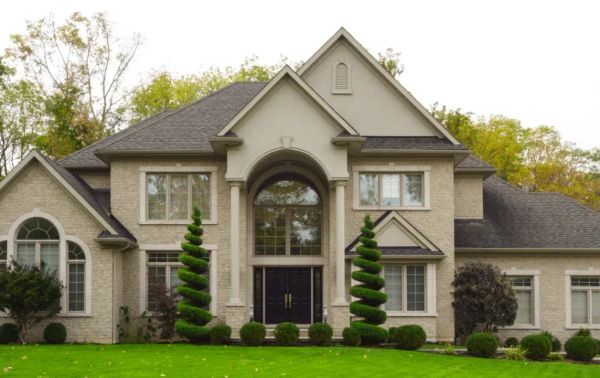
Are custom homes worth the money compared to buying existing? In my experience building custom luxury homes across Parker, Tarrant, and Wise County for three decades, the honest answer is yes if you plan to live in the home long enough to use what you paid for, and no if you need to move in six months and price is your only concern. A custom build runs $250 to $550 or more per finished square foot and takes 12 to 14 months plus 3 to 6 months of design and permitting. An existing home closes in 30 to 45 days. Those are two different products, not two prices on the same house, and conflating them is where most buyers get confused.
What Does Buying an Existing Home Actually Save You Upfront?
Speed and certainty. You walk through the house, you know exactly what you are getting, and you can close in a month or so with a conventional mortgage. There is no design phase, no permitting wait, no construction loan draw schedule. If your family needs to be in a house by the start of the school year, existing inventory is often your only realistic option. Existing homes in established neighborhoods also come with mature trees, finished landscaping, and sometimes a lower price per square foot than new construction, especially in a slower part of the market.
What Do You Give Up When You Buy Existing in North Texas?
You give up control over almost everything that matters once you move past the listing photos. Someone else chose the layout, the ceiling heights, the kitchen location, and whether the primary suite sits near the noisy street side of the lot. You also inherit their maintenance history, visible or not. A roof that looks fine in photos might be twelve years into a twenty year life. HVAC systems sized for a different climate assumption than today's North Texas summers. Foundation work on Parker County's expansive clay soil that was patched instead of properly engineered. None of that shows up until you own it.
You also give up acreage flexibility. Most existing inventory in Weatherford and Aledo sits on standard in-town lots. If you want a few acres with room for a shop, horses, or real separation from neighbors, new construction or build on your lot is usually the only path, since raw acreage with an existing custom home on it rarely comes up for sale.
How Does the Total Cost Compare Over Time?
| Factor | Buying Existing | Building Custom |
|---|---|---|
| Timeline to move in | 30-45 days | 15-20 months (design, permitting, construction) |
| Upfront price certainty | High, fixed sale price | Moderate, open book pricing locks scope before you sign |
| Deferred maintenance risk | Real, often hidden at closing | None, everything is new and under warranty |
| Layout fit for your family | Fixed, take it or renovate | Built around how you actually live |
| Systems lifespan | Unknown remaining life | Full lifespan from day one |
| Warranty coverage | None beyond seller disclosure | 1-year workmanship, 2-year systems, 10-year structural |
| Lot and acreage options | Limited to available listings | Your land, your acreage, your privacy |
The sticker price on an existing home almost never includes what you will spend in years two through ten catching the house up to your standards. I have watched clients buy a resale home at a discount to new construction, then spend six figures over the following five years on a kitchen remodel, a new roof, and foundation repair, numbers that would have been built into a transparent custom budget from the start.
There is also a people cost to each path that a spreadsheet will not show you. On a resale purchase, you are relying on an inspector's one day snapshot and a seller's disclosure to tell you what thirty years of someone else's decisions actually did to the house. On a custom build, I am on site personally through every phase, not rotating between a dozen projects, and only a few builds run at a time so the structural choices made in weeks three through twelve get my direct attention rather than a project manager's best guess. That is not a marketing line, it is the reason our homes carry a one-year workmanship, two-year systems, and ten-year structural warranty with confidence.
Does a Custom Home Cost More Per Square Foot Than Resale?
Usually, yes, at the moment of purchase. New construction carries current labor and material costs, current code requirements, and the cost of a finished first-use home rather than a depreciated one. I cover the full breakdown of where that money goes in my post on custom home cost breakdown in North Texas, and the short version is that land, design, site work, construction, and finishes all stack up before you ever get to compare against a resale sticker price. What that per-square-foot number buys you is a house with zero deferred maintenance and a decade of structural warranty standing behind it, something no resale listing can offer no matter how well staged it looks.
When Does Buying Existing Make More Sense Than Building?
I tell people straight when custom is not the right move for them. If your timeline is inflexible and you need to be in a house within a few months, buy existing. If you are not sure you will stay in the area for more than three or four years, the time and cost of a custom build rarely pays off compared to a solid resale purchase. If you genuinely love a specific established neighborhood's character, mature trees, and walkability, and nothing on the market matches it in new construction, existing inventory wins. Custom building makes the most sense when you have land or want land, when you plan to stay ten plus years, and when the layouts available on the resale market keep forcing compromises you are tired of making.
Families moving toward Weatherford or Aledo for the acreage and the school districts are usually the ones for whom custom makes the clearest sense, because the resale inventory in those exact configurations, acreage plus a modern layout plus current systems, simply does not exist in enough supply to shop for. According to NAR's existing home sales data, national resale inventory has stayed historically tight for several years running, and in a market like ours that scarcity is sharpest in exactly the acreage segment custom buyers want most.
What Should You Do Next?
- Get honest about your timeline. If you need a house in 60 days, this is not a hard decision. If you have 12 to 18 months of runway, custom is worth a serious look.
- Price out both paths on the same house size. Bring me a resale listing you are considering and I will walk you through what an equivalent custom home on comparable land would actually run, line by line, through our open book pricing process.
- Walk a finished home before you decide. See our gallery of completed projects, then schedule a free consultation or call me directly at (817) 736-6323. After 100+ homes since 1995, I can tell you which of these two paths fits your actual situation, not just your Pinterest board.
Buying existing and building custom are both legitimate choices. The mistake is comparing them on price alone, when what you are really buying is time, risk, and how well the house fits your life for the next twenty years.