
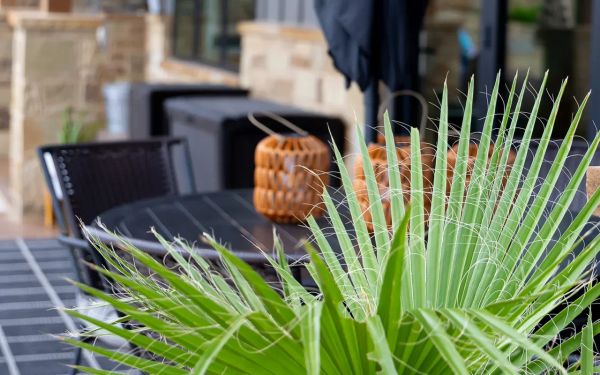
Every family tells me during design they want an amazing outdoor living space, and almost every family means something different by it. After building more than 100 homes across North Texas, I can tell you which outdoor features our clients actually walk out to every evening and which ones end up as expensive photo backdrops. I keep a running list of both, the same way I track what holds up and what doesn't across every home in our gallery of finished projects, and this post is that list.
What Outdoor Living Features Do Families Use Most?
The honest answer is the simplest one: a covered patio with real shade and an outdoor kitchen within a few steps of the indoor kitchen. Families use these almost daily, in every season except the hottest weeks of August. A fire feature, whether a built fireplace or a simple fire pit, comes in third, getting heavy use from October through April when North Texas evenings turn genuinely pleasant. Everything past those three items gets used, but noticeably less, and the gap tends to surprise people who assumed the more dramatic features would get the most traffic.
| Feature | Typical Use Frequency | Why |
|---|---|---|
| Covered patio with deep shade | Daily, most of the year | Usable even in summer heat if the overhang is deep enough |
| Outdoor kitchen near indoor kitchen | 3-5 times a week in season | Short walk from the indoor kitchen keeps it part of normal cooking, not a special occasion |
| Fire pit or fireplace | Weekly, fall through spring | Low effort, works for short evenings outside |
| Pool | Daily in summer, rare off-season | Climate limits it to roughly four months of heavy use |
| Outdoor dining area separate from kitchen | A few times a month | Used mostly for gatherings rather than everyday meals |
| Built-in outdoor fireplace with seating wall | Occasional | Impressive but requires more commitment to use than a simple fire pit |
Why Does Shade Matter More Than Square Footage?
I have walked back into more than one finished home where the family admitted the patio looked great in the renderings but sat empty by early afternoon because the roof overhang was too shallow. In North Texas, direct sun pushes patio surface temperatures high enough that shade isn't a comfort upgrade, it's the difference between a space getting used or not. I push every family toward a covered patio of at least 300 to 400 square feet with a roofline deep enough to keep the whole seating area shaded through midday, even if that means a slightly smaller footprint elsewhere. A covered patio half that size, fully shaded, gets more daily use than a larger uncovered one that only works in the morning.
Where Should the Outdoor Kitchen Actually Go?
Right off the indoor kitchen, not at the far end of the patio. I have built both layouts, and the pattern is consistent: when someone can step outside, start the grill, and still hear a conversation happening in the kitchen, the outdoor kitchen becomes part of normal weeknight cooking. When it sits a long walk away for the sake of a dramatic sightline, it turns into a space reserved for parties, used a handful of times a year instead of several times a week. On one build out near Graford, we kept the outdoor kitchen and covered dining area tucked just off the back doors under the same roofline as the main living space, and the family told me during our final walk-through that it had become their default dinner spot most weeks the weather allowed it.
Is a Pool Worth It in This Climate?
For some families, yes. For others, it ends up being the least-used big-ticket item on the lot. North Texas summers make a pool genuinely valuable from roughly Memorial Day through late September, but outside that window it sits unused far more than any other outdoor feature we build. I'm honest with every client about this tradeoff up front. Pools, spas, and specialty outdoor structures are scope we coordinate through trusted vendors rather than build ourselves, so if a pool is part of the plan, I want that conversation happening during design, not after the house is framed, so the plumbing stub-outs, electrical, and pad grading are placed correctly the first time.
The families who get the most use out of a pool tend to be the ones who pair it with a covered patio right alongside it, rather than treating the pool deck as the only outdoor space. That way the yard still works in March and November, when nobody is swimming but everyone still wants to be outside after dinner. A pool built in isolation, with no shaded seating nearby, tends to sit quiet most of the year even for families who swim in it constantly during summer.
What Should You Design First: The House or the Outdoor Space?
Design them together. The decisions that make outdoor living space actually get used, roofline depth, door placement from the kitchen, where gas and water lines run for a future outdoor kitchen, all have to happen during home design and floor plan work, not as an afterthought once the house is framed. I covered a related version of this same principle in my post on designing a multigenerational custom home, where getting the shared gathering space right made more difference to how a family actually lived in the house than almost any interior finish choice.
This matters even more on acreage, where the outdoor living space often needs to work for more than relaxing. Families building on land around Brock and out toward Possum Kingdom frequently want a covered patio that also serves as a staging area for yard work, hunting season, or boat gear, which changes where doors, storage, and hose bibs need to go. On a tighter in-town lot in Weatherford, the same priorities apply at a smaller scale, shade and proximity to the kitchen matter just as much on a half-acre as they do on twenty.
Do These Features Actually Add Resale Value?
I have not seen reliable North Texas resale data broken out by specific outdoor features, so I won't invent a number here. What the National Association of Home Builders has published on outdoor living trends consistently shows covered patios and outdoor kitchens ranking among the features buyers rate as most desirable nationally, which matches what I see locally: a well-shaded, well-placed outdoor living space reads as genuinely livable square footage to a future buyer, not just decoration.
What Should You Do Next?
- Prioritize shade over size. A smaller, fully covered patio beats a larger uncovered one for actual day-to-day use in this climate.
- Put the outdoor kitchen close to the indoor one. Distance is the single biggest reason an outdoor kitchen goes unused.
- Decide on a pool early if you want one. It changes plumbing, electrical, and grading decisions that are expensive to retrofit later.
We have been building custom homes across Parker County and North Texas since 1995, more than 100 of them, and outdoor living space is one of the few areas where I will tell a family to spend less on drama and more on the basics that actually get used. If you want to walk through what fits your land and your family's habits, schedule a free consultation or call me directly at (817) 736-6323.