
If you have gotten deep enough into planning a custom home to hear the phrase "value engineering," you have probably also heard it used as a euphemism for cutting something you wanted. That is not what it actually means, and the difference matters. I walk every client through this idea during the design phase of our process, because used correctly, early, and with real cost data, value engineering is one of the most useful tools we have for keeping a $1.2M to $4M+ custom home on budget without touching quality. Used late or used carelessly, it becomes exactly the corner-cutting people are afraid of.
What Is Value Engineering and When Should You Use It?
Value engineering is a structured review of a design to find ways to deliver the same function and the same quality for less money, or more value for the same money. It is not about picking the cheapest option on a list. It is about asking what a wall, a roof system, or a cabinet package actually needs to do, then checking whether there is a smarter way to do it. The organization that formalized this discipline, SAVE International, defines it as a systematic process to improve the value of a project by examining its function, and that function-first approach is exactly what separates real value engineering from a budget haircut.
The timing answer is simple: use it during design, before your construction documents are finalized and before subcontractor bids are locked in. That is when changing a spec costs you a conversation. Wait until framing is up or cabinets are ordered, and the same change costs you demolition, reorder fees, and schedule time you cannot get back.
How Is Value Engineering Different From Cutting Corners?
Cutting corners means reducing cost by reducing quality or performance, often without telling the client clearly what changed. Value engineering means finding an alternative that performs the same function at the same quality level for less money, or identifies that a feature is not worth its cost relative to what the client actually wants from the home.
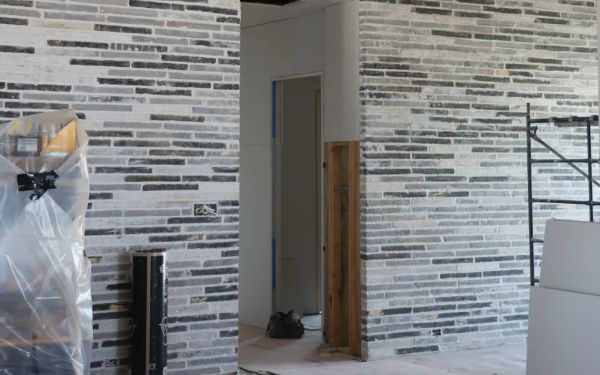
Here is a real distinction from our own jobs. Switching from a specified stone veneer to a lower-grade stone to save money on a tile accent wall is cutting a corner, because the homeowner notices the difference in texture and color the day it is installed. Switching the substrate or installation method behind that same stone, so the finished wall looks identical but the labor and material cost less, is value engineering. The client gets the wall they picked. The budget gets relief somewhere invisible.
When in the Build Should You Value Engineer?
| Phase | What You Can Still Change | Typical Savings Potential |
|---|---|---|
| Schematic design | Layout, square footage, roof complexity, structural system | Highest, 5-15% of total cost |
| Design development | Material categories, window packages, mechanical systems | Moderate, 3-8% of total cost |
| Construction documents | Finish-level specs, fixture tiers, cabinet packages | Lower, 1-4% of total cost |
| Under construction | Only unordered, unfinished items | Lowest, and usually involves rework cost that eats the savings |
This is why I bring up cost realities during design and floor plan development rather than waiting for a final number to shock anyone. A roofline simplified in schematic design can save real money with zero visual compromise, because it was designed that way from the start. Try to simplify that same roofline after trusses are engineered and ordered, and you are not value engineering, you are starting over.
What Are Real Examples of Value Engineering on a Custom Home?
A few patterns show up again and again on our projects in Parker, Tarrant, and Wise counties:
- Foundation and structural systems. On a site with Parker County clay, an engineer may offer two or three pier and grade beam configurations that all meet the geotechnical report. They are not equal in cost. Choosing the one that satisfies the soil report for less money, instead of defaulting to the most conservative option out of habit, is value engineering done correctly, not a risk taken with your foundation.
- Window and door packages. Consolidating sizes across a plan so a window manufacturer can run fewer unique units often cuts cost meaningfully with no change to how the house looks or performs, because the function, light, view, and energy performance, stays the same.
- Mechanical zoning. Right-sizing an HVAC system to the home's actual load calculation, instead of over-specifying capacity "to be safe," regularly saves money on equipment without sacrificing comfort, because an oversized system often performs worse on humidity control in North Texas than a correctly sized one.
- Basement scope. On a real Texas basement, the waterproofing and structural engineering are never the place to value engineer. The finish-out is. A theater room can be acoustically treated well without the most expensive package on the market, and that tradeoff rarely shows up in how the room feels to use.
When Should You Avoid Value Engineering?
Never on structural engineering, waterproofing, or anything tied to your one-year workmanship, two-year systems, and ten-year structural warranty. Those are the systems that determine whether your home is still square, level, and dry in thirty years, and the savings available there are small relative to the risk. I covered a related version of this line in hidden costs of building a custom home nobody mentions: the money you do not see going into the ground and the walls is usually the money that matters most.
Avoid it too when a client's actual priority is the feature in question. If a kitchen is the reason a family chose to build custom instead of buying existing, that is not where I look for savings, because the dollar value engineering returns there is smaller than the value it would cost the client in daily satisfaction with the home.
Who Should Lead Value Engineering Decisions?
Your builder should be bringing you options, not making the call unilaterally. On every Open Prairie project, cost data is visible through open book pricing, so when I suggest a value-engineered alternative, you are seeing the real numbers behind both choices, not taking my word for it. That transparency is what keeps value engineering from becoming a trust problem. You should walk away from every one of these conversations knowing exactly what changed, why, and what it saved, in writing, the same way I'd want it explained to me.
The National Institute of Building Sciences frames value engineering the same way for institutional construction: it works as a collaborative review, not a unilateral cost cut imposed on a finished design. That principle holds just as true on a $1.5M custom home as it does on a courthouse.
What Should You Do Next?
If a builder's answer to "can we save money here" is a confident number with no explanation of what changed, ask again. A real value engineering conversation comes with a clear before-and-after and a reason the alternative still performs. Bring your plans, your priorities, and your questions about cost to a free consultation and I will walk through where value engineering genuinely helps your specific project and where it does not belong. Call me directly at (817) 736-6323, or look through our gallery to see the kind of quality we protect while we do it.