
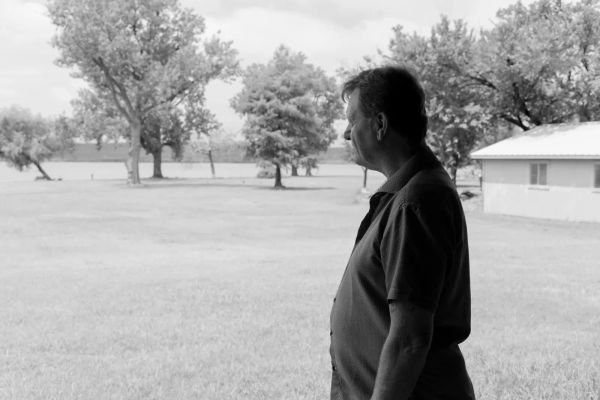
A meaningful share of our work starts the same way: a family bought land years ago, it sat there while life happened, and now they are finally ready to build. If that is you, the first move is not picking a floor plan off the internet, it is a free on-site walk where we evaluate what your specific piece of ground can actually support before anyone draws a single wall.
What Happens First When You Already Own the Lot?
We meet you on the property, not in an office, and spend 45 minutes to an hour walking the buildable envelope with you. I look at drainage, the sun line, prevailing wind, which trees are worth keeping, where the septic field and well will realistically sit, and how far utilities have to travel to reach a house pad. You get a straight read on what the land supports and a real cost range before anything is signed. No plan gets drawn until that walk happens, because a floor plan designed in a vacuum almost never fits the lot it eventually lands on.
What Does the Free Site Walk Actually Cover?
Five things, in roughly this order: the buildable pad and setbacks, drainage across the property, septic and well feasibility, utility distance from the road or pole, and access for construction equipment. On Parker County clay soil, drainage and septic feasibility usually matter more than anything else, because a gorgeous homesite with poor percolation can add tens of thousands of dollars in engineered septic costs you did not budget for. County health departments administer the actual on-site sewage facility permit in most of our service area, and that permit depends entirely on the soil evaluation we get during the walk, so we would rather flag a bad percolation result on day one than after you have hired an architect.
I also walk the property with an eye toward what you would never think to ask about: where the construction trucks and concrete trucks will actually enter and turn around, whether the existing driveway can handle that traffic without needing to be rebuilt first, and which trees are mature enough to build the landscaping plan around instead of clearing everything and starting over. None of this shows up on a plat map. You only find it by standing on the dirt.
What Can Your Land Actually Support?
It depends on acreage, soil, topography, and whatever deed restrictions or county rules apply to that specific tract. A flat one-acre lot inside Weatherford city limits ties into municipal water and sewer and has a straightforward buildable envelope. A rolling twenty-acre tract out past Brock or Springtown runs on private well and septic, which is entirely workable, it is most of what we build, but it means site work and septic design have to get engineered for that soil before you can price the house itself. County appraisal and platting records usually show the existing easements and setbacks, and checking the actual soil survey through the USDA NRCS Web Soil Survey before design starts saves everyone a surprise later.
| Land Situation | What's Usually Already There | Typical Added Site-Work | What We Check First |
|---|---|---|---|
| In-town lot (Weatherford, Aledo) | Municipal water, sewer, graded street access | Low, mostly grading and utility taps | Setbacks, HOA or deed restrictions |
| Acreage with existing driveway | Road access, maybe a cleared pad | Moderate, well and septic design | Soil percolation, well yield |
| Raw acreage, no improvements | Boundary survey only | Higher, driveway, clearing, utilities, septic | Access route, tree cover, drainage |
| Lot with a creek or low spot | Partial dry pad | Moderate to high, pad elevation, drainage plan | FEMA flood map, buildable pad location |
How Does Owning the Land Change Your Financing?
It usually helps, and it can help a lot. Paid-off land or land with meaningful equity frequently counts toward the down payment on a construction loan, which changes how much cash you need at closing compared to someone buying both the lot and the house in one package. I always tell clients to bring the deed, the original purchase price, and any remaining loan balance to that first lender conversation, because how construction loans work in Texas depends heavily on what equity you are bringing versus borrowing from scratch.
What Site Work Costs Should You Expect Before Construction Starts?
Across our projects, which typically run $250 to $550 or more per finished square foot, site work on raw acreage adds a real line item before the house itself ever starts, often driveway construction, well drilling, septic design and installation, electrical service extension, and pad grading. An in-town lot with existing utilities skips most of that. This is exactly why custom homes on acreage get priced differently from a lot inside city limits, and it is also why the site walk happens before any number gets quoted, not after.
How Long Does the Design and Permitting Phase Take on Your Own Lot?
Plan on three to six months for design and permitting before construction starts, on top of a typical 12 to 14 month build. Owning the land does not shorten this phase, if anything it gives us more freedom in the floor plan, which means more decisions to make up front: orientation, septic placement, driveway routing, and whether the county or your specific subdivision has its own permitting quirks. Our process page walks through each phase in order, but the short version is that the land dictates the sequence more than the house design does.
On acreage, the septic design and county health department approval usually run in parallel with the architectural drawings rather than after them, because the soil evaluation and the house footprint influence each other. If the percolation test comes back poor on the first choice of pad, we move the house or the septic field rather than redesigning the whole plan from scratch. That is another reason the on-site walk happens before the floor plan is finalized, not after, catching a soil problem in week two costs you nothing, catching it in month four costs you a redesign.
What Mistakes Do Landowners Make Before Calling a Builder?
The most common one is picking a floor plan first and hoping it fits the lot. A plan designed for a flat suburban pad rarely drops cleanly onto rolling acreage with a creek, a tree line, or a slope worth using for a walkout basement. The second mistake is assuming the land is ready because it looks ready, grass and a driveway do not tell you anything about percolation rates or well yield. The third is skipping the deed restriction check, a handful of older acreage tracts around Decatur and Peaster still carry covenants from the original subdivision that affect square footage minimums or exterior materials, and finding that out during design is far cheaper than finding it out during permitting.
What Should You Do Next?
If you already own the land, call me before you call an architect. I have built more than 100 custom homes since 1995 on everything from in-town lots to raw Parker County acreage, and the walk-the-lot-first approach is the single biggest reason those builds came in on budget. The site walk is free, there is nothing to sign, and you walk away with a real cost range instead of a guess. Call (817) 736-6323, look through the gallery for homes we have built on land just like yours, or schedule a consultation and we will meet you on the property.